Nursery News! Fall 2026 By Alison Gardner
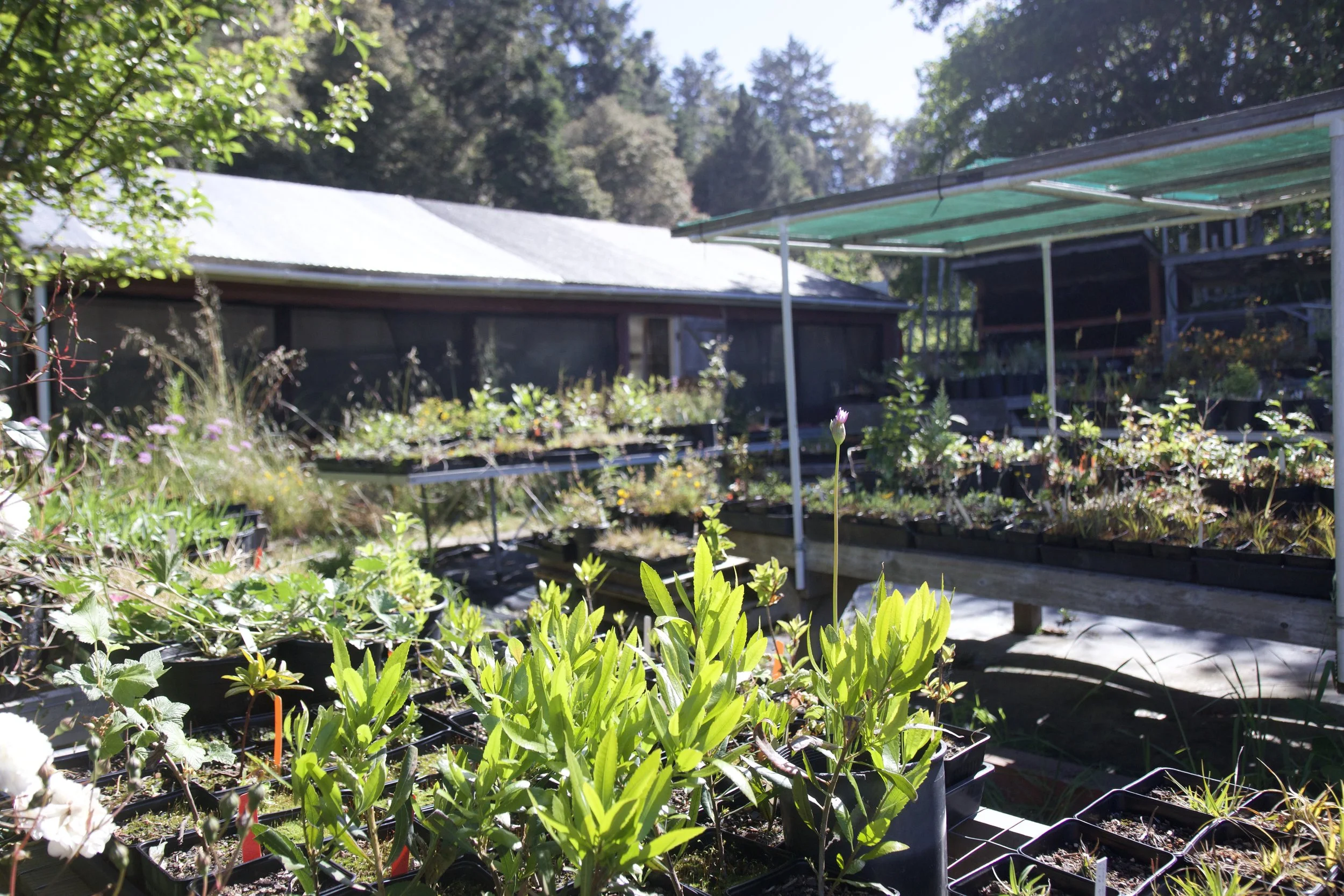
Fall Planting - buy your plants before the rain
Fall is the best time for planting, after the rains get going, so the plants can establish their root systems before the onset of the dry summer. However, the low road around the back of the farmhouse at Jug Handle becomes wet and impassable, so nursery customers have to park at the top of the hill. If you buy your plants before the rains start, you can still drive around the track that goes around the farmhouse for loading.
Native Grasses
As many native grasses are not well known, I thought I’d write a little about them, as we carry a number of different grasses here at the Nursery. Some are useful as specimen plants, and others to cover ground.
Native grasses are not as common as they were before the arrival of European explorers, due to competition from non-native grasses. The seeds came in even before this coast was colonized as ballast from ships. Many more were added with colonization, and planted for hay and livestock forage. This area has quite a few native grasses, especially on the coastal bluffs, but also as remnants in meadows and headlands. Native grasses can be used as ground cover, for erosion control, or as specimen plants.
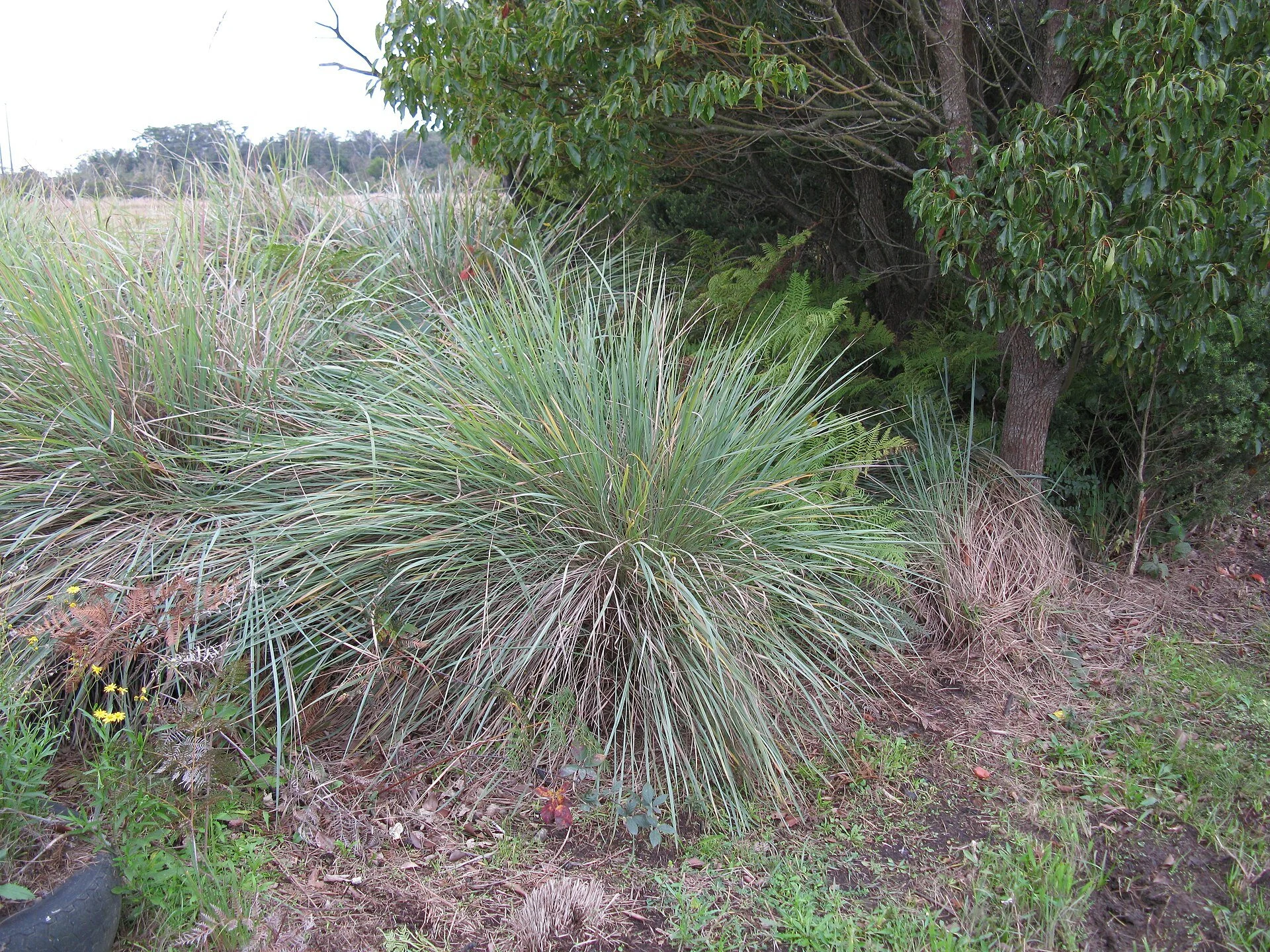
Calamagrostis nutkaensis
Jug Handle Nursery carries a number of local native grasses, including our state grass, purple needlegrass (Stipa pulchra), as well as California oatgrass (Danthonia californica), Blue Wildrye (Elymus glaucus) and Red Fescue (Festuca rubra, both blue and green forms), which are found inland as well as on the coast. All of these can be used to cover areas; California oatgrass can also be a small specimen grass. It can be planted in moist or dry areas, as can red fescue. The rest are adapted to dry areas.
Our coastal bluff selection includes one-sided poa (Poa unilateralis), the rare Blasdale’s bentgrass (Agrostis blasdalei), Nootka Reedgrass (Calamagrostis nutkaensis), coast barley (Hordeum brachyantherum), California Bentgrass (Agrostis densiflora), and Maritime Brome (Bromus sitchensis var. maritimus), the coastal wetland Panic Grass (Panicum acuminatum var. lindheimeri) and coastal hairgrass (Deschampsia cespitosa, Calamagrostis nutkaensis both the species (wetland) and var. holciformis (bluff). Nootka reedgrass will grow in sun or shade, and can cover areas, or be a specimen plant. They will grow in wetlands, but can do with little summer water. Blasdale’s bentgrass is adapted to shallow and compact soils, as are the one-sided poa and the California bentgrass. The rare species that our nursery carries were started from a few seeds or cuttings taken responsibly from very few plants on private property, which we then increase from those starts. They should not be planted within 100’ of an area where future development may be done.
We have Pine Reedgrass (Calamagrostis rubescens) which is one of the few grasses found in the pygmy and semi-pygmy. And some woodland grasses, Vanilla Grass (Anthoxanthum occidentale), Nodding fescue (Festuca subulata), Bolander’s Reedgrass (Calamagrostis bolanderi, threatened status) and Nodding false oat (Trisetum cernuum).
We also have a natural hybrid ryegrass, which is rhizomitous and can be invasive, but can be useful to cover a lot of land quickly to prevent erosion, Vancouver Ryegrass (Elymus x vancouverensis). If unmown, it can reach 4 to 6’ high when blooming.
The Nursery is open to the public by appointment only. Please contact Alison for all your native plant needs.